
Are you ready to boost your drone racing skills and lead the pack? The racing drone market is set to hit $2.35 billion by 2027. This is the ideal time to jump into this exciting sport. Whether you’re new to drone racing or a seasoned pro, this guide has the winning tips you need.
FPV racing drones give you unmatched freedom and control, unlike automated drones. With an FPV drone, you control altitude, rotation, and speed. This lets you do amazing stunts and race at high speeds. But, mastering these drones takes a lot of practice and patience, often months to get good at flips and rolls.
In this guide, we’ll cover everything from drone racing basics to choosing the right gear. We’ll also dive into flying techniques and local drone races. Whether you pick a ready-to-fly drone or build your own, we’ve got the insights and tips to help you shine in competitive drone racing.
Key Takeaways
- Understand the differences between racing drones and regular drones, including the level of control and skill required.
- Consider factors like durability, flight performance, and FPV compatibility when selecting a racing drone.
- Invest in quality FPV equipment, such as cameras, video transmitters, and goggles, to ensure the best racing experience.
- Practice extensively using drone racing simulators and by participating in local races to improve your skills.
- Continuously learn from your experiences and engage with the drone racing community to stay up-to-date on the latest techniques and trends.
Understanding the Basics of Racing Drones
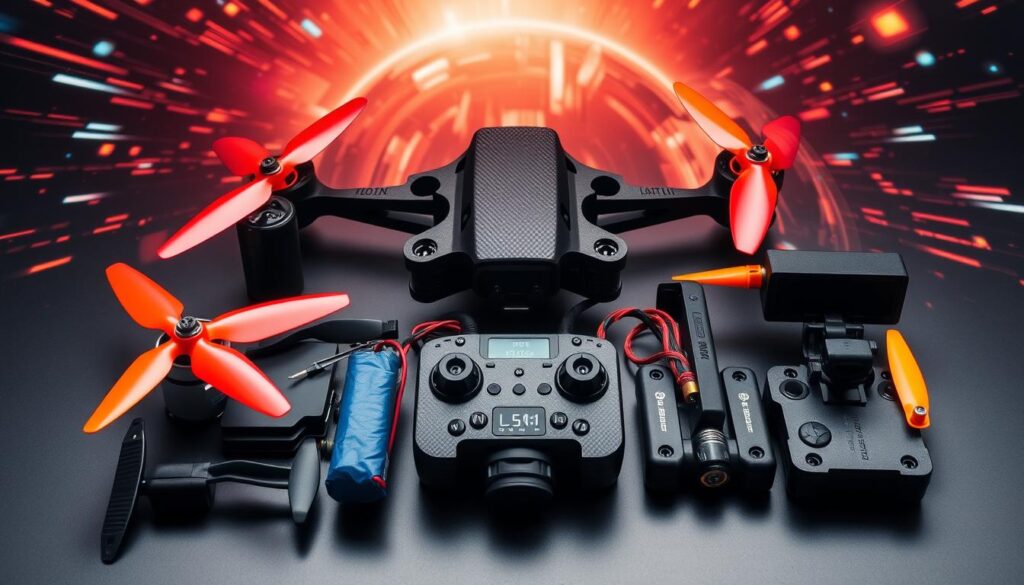
Racing drones, also known as FPV (First-Person View) drones, have become very popular. They are small, lightweight, and fast, making them great for racing. To learn about racing drone basics, let’s see how they differ from regular drones and what makes them special.
How Racing Drones Differ from Regular Drones
Racing drones are not like regular drones used for photos or fun flying. They are built for speed and can do cool tricks. FPV drones are mainly used in racing, a sport that’s all about being fast and competitive.
Essential Components of a Racing Drone
A racing drone has key parts that make flying fun. These include:
- Frame: The frame is the drone’s structure, made of lightweight materials like carbon fiber. It helps the drone move fast and do tricks.
- Motors: These powerful motors make the drone fly fast. Most drones have four rotors, which makes them stable and agile.
- Electronic Speed Controllers (ESCs): ESCs control the motors’ power. This lets the drone move smoothly and quickly.
- Flight Controller: This is the drone’s brain. It takes commands from the pilot and helps the drone fly well.
- Propellers: High-performance propellers help the drone move fast and efficiently.
- Battery: LiPo batteries power the drone. They are light and give lots of power, which is important for racing.
First-Person View (FPV) Systems Explained
FPV systems are what make racing drones special. They include a camera, a transmitter, and goggles or a monitor for the pilot. There are two types: Digital and Analog. They send live video from the camera to the pilot’s display.
FPV drone racing is getting more popular. People are learning more about drone technology. Many like to build their own drones, showing they want to customize and understand drone components. By learning about racing drone basics and FPV systems, pilots can enjoy this exciting sport even more.
Selecting the Right Racing Drone
Choosing a racing drone can be a big decision. You have two main options: Ready-to-Fly (RTF) drones and Build-It-Yourself (BIY) kits. RTF drones are perfect for beginners because they’re ready to fly right away. BIY kits, on the other hand, let experienced pilots customize their drones to fit their needs.
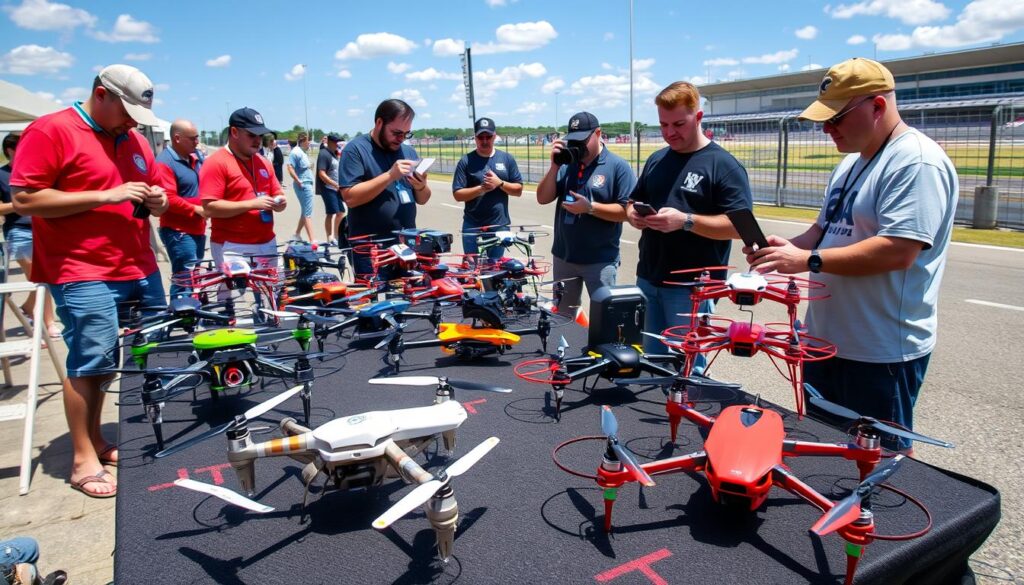
The global market for consumer camera drones, including racing drones, was worth about USD 3.8 billion in 2023. It’s expected to grow to USD 11.5 billion by 2030, with a 16.9% CAGR. This shows how popular drone racing is becoming as a hobby and competitive sport.
Ready-to-Fly (RTF) vs. Build-It-Yourself (BIY) Drones
When choosing between RTF drones and BIY kits, think about your skill level and how much time you want to spend on your drone. RTF drones are pricier but save you time. BIY kits are cheaper and let you learn about your drone’s parts.
Building a custom drone from scratch needs tools like a soldering iron. Soldering is key, and a gas soldering iron is recommended for its portability and reliability. While building your drone can be rewarding, it also has its challenges, like finding faults and tuning the drone.
Factors to Consider When Choosing a Racing Drone
When picking a racing drone, consider a few key factors:
- Durability: Racing drones face high-speed crashes, so choose a sturdy drone with quality parts.
- Flight Performance: Look for a drone with a good power-to-weight ratio for speed and agility. Top drones can hit 100 mph and do tight maneuvers.
- FPV Compatibility: Make sure the drone works with your FPV goggles or monitor for a better racing experience.
- Battery Life: Most drones fly for 5 to 10 minutes. Think about how many batteries you’ll need for practice and races.
- Price: Drones range from under USD 100 to over USD 1,000. Find one that fits your budget and offers value.
By considering these factors and researching models, you’ll find the perfect racing drone. Also, learn about local drone laws to ensure safe and legal flying.
Getting Familiar with Drone Racing Regulations
Before you start flying your racing drone, it’s key to know the laws and safety rules. Drone racing regulations differ by country and region. So, it’s important to check the rules in your area.
In the United States, the Federal Aviation Administration (FAA) has rules for drone pilots. These include:
- Registering your drone if it weighs more than 0.55 pounds (250 grams)
- Flying below 400 feet and keeping your drone in sight
- Staying away from airports, stadiums, and other no-fly zones
- Not flying over people without their okay
To have a safe and fun time, follow these safety tips:
- Check your drone before flying to make sure it’s ready
- Fly in open spaces, away from obstacles and people
- Avoid flying in bad weather like strong winds or rain
- Have a spotter to watch for dangers
Also, drone races have their own rules. For example, the World Grand Prix in Dubai had special rules. These included using the same equipment and following strict safety rules.
“Drone racing is an exhilarating sport, but it’s crucial to prioritize safety and compliance with regulations to ensure a thrilling and responsible experience for everyone involved.”
By understanding and following drone racing rules, you help keep everyone safe. This also helps make the sport more accepted and exciting for all.
Mastering the Controls and Flying Techniques
To excel in drone racing, you need to master the controls and improve your flying skills. The drone market in the USA alone hit $11.1 billion in 2022. This shows how popular drone racing is getting.
Racing drones are made for fast-paced races. They have lightweight frames, strong motors, and quick movements. This lets pilots race head-to-head and push their limits. Freestyle drones, on the other hand, are for doing cool stunts and capturing amazing videos.
Basic Maneuvers for Beginners
For beginners, learning basic maneuvers is key. These include taking off and landing, hovering, and flying forward. Practicing these skills helps build a strong foundation for safe flying.
| Maneuver | Tutorial Duration |
|---|---|
| Takeoff and Landing | 2:38 |
| Hovering | 4:12 |
| Forward Flight | 6:17 |
Advanced Flying Techniques for Experienced Pilots
As pilots get more confident, they can try advanced techniques. Our guide covers 16 beginner and 16 intermediate FPV maneuvers. This helps pilots learn and improve their skills.
- Reverse / Backward Orbits
- Corkscrew
- Rolls
- Back Swing
- Skate In Between Tricks
- Flips
- FPV How To Land
- Backward Flying
- How To Turn (Properly & Smoothly)
- Perfect Split-S
- Inverted Lookback
- Roll Smoothly
- Orbits
- 360° Yaw Spin
- Power Loop
- Lunge (Freestyle Trick)
Mastering advanced maneuvers is the key to unlocking your full potential as a drone racing pilot. With dedication and practice, you’ll be soaring through the skies with finesse and precision.
Always remember to fly safely. Choose open areas, use a spotter, and stay within safe boundaries. By focusing on safety and improving your skills, you’ll become a skilled drone racing pilot.
Investing in Quality FPV Equipment
To dive into the world of drone racing, you need top-notch FPV equipment. Your FPV setup is key to a great racing experience. So, picking the right parts is crucial.
Choosing the Right FPV Camera and Video Transmitter
When picking an FPV camera and transmitter, think about resolution, latency, and compatibility. Look for cameras that capture great images and have low latency. This ensures a smooth flying experience. The Team Black Sheep Unify module is a favorite among racers for its reliable video.
Also, consider your drone’s needs. For example, 210mm to 250mm quads often use 2206 brushless motors. These can work well with the right FPV gear.
Selecting the Best FPV Goggles or Monitor
FPV goggles or monitors are vital for an immersive racing experience. Think about resolution, comfort, and reliability when choosing. Many racers prefer high-end goggles like Fatshark for their quality and performance.
| FPV Goggles | Resolution | Features |
|---|---|---|
| Fatshark Dominator HDO2 | 1280×960 | OLED displays, IPD adjustment, modular design |
| Skyzone Sky04X | 1280×720 | OLED displays, diversity receivers, DVR |
| Eachine EV200D | 1280×720 | Diversity receivers, built-in DVR, HDMI input |
Investing in quality FPV gear improves your racing and makes your setup last longer. Do your research to find the best fit for your budget and needs. With the right FPV equipment, you’ll be ready to take on the drone racing world!
Tips for Building a Winning Racing Drone
To build a racing drone that beats the competition, you need to think about many things. Choosing the right parts, improving aerodynamics, and fine-tuning the flight controller are all key. Let’s explore the main tips for making a top-notch racing drone.
Optimizing Drone Performance through Component Selection
Choosing the right parts is the first step to a high-speed racing drone. Many people choose 2205/2305 motors for their speed, reaching up to 185km/h. The Tattu 2305 2450KV motor, with dalrc5045 3 propellers, offers a strong thrust of about 1200g per motor.
The XR 220 frame is both light and strong, helping to cut down wind resistance. Carbon fiber frames are also popular for their durability and lightness. Frame sizes can vary from 2 to 7 inches, with common shapes like the H-frame and True-X frame.
The Tattu BLHeli_S 30 AMP ESC is a good choice for the electronic speed controller. The Flight Control F3 is also widely used in FPV quadcopter builds. High discharge rate Tattu batteries, at least 60C, are recommended for fast racing.
Improving Aerodynamics and Reducing Weight
Improving your drone’s aerodynamics is key for speed and efficiency. Streamlining the design and ensuring smooth airflow can greatly reduce drag. Also, keeping the drone light is crucial for better performance.
To balance and stabilize the drone, evenly distribute the weight of the parts. Place the battery, camera, and other components strategically. A simple design improves aerodynamics and makes maintenance easier.
Configuring the Flight Controller for Maximum Responsiveness
The flight controller is the drone’s brain, and its setup is vital for responsiveness. Adjusting PID values and rates can fine-tune the drone’s handling for racing.
| Setting | Description | Recommended Value |
|---|---|---|
| P Gain | Determines the responsiveness of the drone to stick inputs | 3.5 – 4.0 |
| I Gain | Helps maintain a steady hover and reduces drift | 0.02 – 0.05 |
| D Gain | Dampens oscillations and improves stability | 15 – 25 |
| RC Rate | Adjusts the sensitivity of the sticks | 1.0 – 1.2 |
Try different settings and practice often to find the best performance for your drone. Building a winning racing drone takes patience, skill, and a willingness to learn.
Joining a Drone Racing Community
Getting into the drone racing community is a great way to get better, meet others who love it, and keep up with new stuff. Joining local clubs and online forums gives you access to lots of knowledge and experience. This will help you do well in this exciting sport.
Benefits of Joining Local Drone Racing Clubs
Local drone racing clubs are great for pilots of all levels. They have regular meetings, workshops, and races. This lets you learn from pros and race with others nearby. Some key benefits are:
- Getting advice and mentorship from experienced pilots
- Joining in on organized racing events and tournaments
- Attending workshops and training sessions to improve your flying
- Meeting other drone fans and making friends
Being part of a local club can really boost your skills and fun in the sport. In fact, over 40 million people watched a drone race at Hard Rock Stadium in Miami. This shows how popular and exciting drone racing is becoming.
Participating in Online Forums and Discussion Groups
Online forums and groups are also key for drone racing fans. They let you connect with pilots worldwide, share stories, and get advice on many topics. Some top online spots include:
| Platform | Description |
|---|---|
| FPV Racing Subreddits | Reddit has several active subreddits for FPV racing. Here, pilots can ask questions, share tips, and talk about the latest in the sport. |
| RC Groups | RC Groups is a big forum for radio-controlled hobbies, including drone racing. |
| Facebook Groups | There are many Facebook groups for drone racing. They help you connect with pilots nearby and keep up with events. |
By joining these online groups, you can learn a lot, get tips from others, and keep up with new trends and tech in drone racing.
Joining the drone racing community has been one of the best choices I’ve made. The support, friendship, and knowledge shared by others have been invaluable in improving my skills and enjoying the sport more.
Being part of the drone racing community, both locally and online, is key for anyone wanting to improve their racing. With the right connections, resources, and support, you’ll be on your way to becoming a top drone racing pilot.
Practicing on Drone Racing Simulators
For those who dream of drone racing, simulators are a key tool. They let you practice safely and save money. You can train without worrying about breaking expensive drones. This way, you can get better at flying and try out new moves.
Top pilots often practice a lot, sometimes using 100 batteries a week. Playing sports like tennis can also help you fly better. It’s also important to stay focused, as distractions can hurt your performance.
- Set up virtual courses that mimic real-world racing environments
- Practice consistently to maintain muscle memory and improve lap times
- Experiment with different flying styles and techniques to find what works best for you
- Analyze your flight footage to identify and address weaknesses in your performance
Here are some popular drone racing simulators that offer realistic physics and customizable tracks:
| Simulator | Key Features | Compatibility |
|---|---|---|
| DRL Simulator | Official simulator of the Drone Racing League, multiplayer races, real-world tracks | PC, Mac, Xbox, PlayStation |
| Liftoff | Realistic physics, customizable drones, online multiplayer | PC, Mac |
| VelociDrone | Accurate physics, multiplayer racing, track editor | PC, Mac |
| FPV Freerider | Beginner-friendly, adjustable physics, freestyle and racing modes | PC, Mac, Android, iOS |
Remember, success in drone racing is mainly about practice, quick reflexes, and the right mindset. By using simulators for practice and training regularly, you’ll get closer to winning in real races.
Participating in Local Drone Races
Drone racing is thrilling and lets you test your skills against others. Before your first race, make sure your drone is ready and you know the rules. It’s also good to know the event schedule.
On race day, you’ll register, attend a meeting, and race in heats. Stay calm, aim for clean flights, and learn from any mistakes. This will help you do well.
Preparing for Your First Drone Racing Event
Before your first race, do these things:
- Check that your drone is working perfectly
- Practice flying the race course if you can
- Learn the event rules to avoid penalties
- Bring all your drone gear, including spare parts and batteries
Also, joining drone racing clubs or forums can help. You’ll learn from others and get tips.
What to Expect at a Typical Drone Race
A drone race day includes several important parts:
| Event | Description |
|---|---|
| Registration | Pilots check-in and submit their drones for inspection |
| Pilots’ Meeting | Race organizers review rules, safety protocols, and course layout |
| Practice Rounds | Pilots familiarize themselves with the course and test equipment |
| Qualifying Heats | Pilots compete in timed runs to determine their starting positions |
| Main Races | Pilots compete head-to-head in multiple rounds, with winners advancing |
| Awards Ceremony | Top-performing pilots are recognized and awarded prizes |
Focus on flying well and consistently. Learn from your mistakes and others to get better.
Practice is key to getting better at drone racing. Try setting up courses or doing time trials to see how you’re improving.
Drone racing gives you experience, helps you meet others, and improves your flying skills.
Constantly Improving and Learning from Experience
Drone racing fans know that growing and learning are key to getting better. We analyze our race videos, ask for feedback, and look for ways to get better. Trying new things like different parts and flying styles can really help us improve.
Practicing a lot is important to get better at flying. Some top racers use up to 100 batteries a week to hone their skills. Flying with better pilots pushes us to get better too. It’s also important to keep our hands strong, eyes and hands coordinated, and stay focused during races.
It’s also important to keep up with the drone world. We make sure our gear is in top shape. Knowing about the latest drone parts helps us upgrade wisely. With a growth mindset, lots of practice, and a positive attitude, we keep getting better and enjoying FPV racing.